
Uncategorized
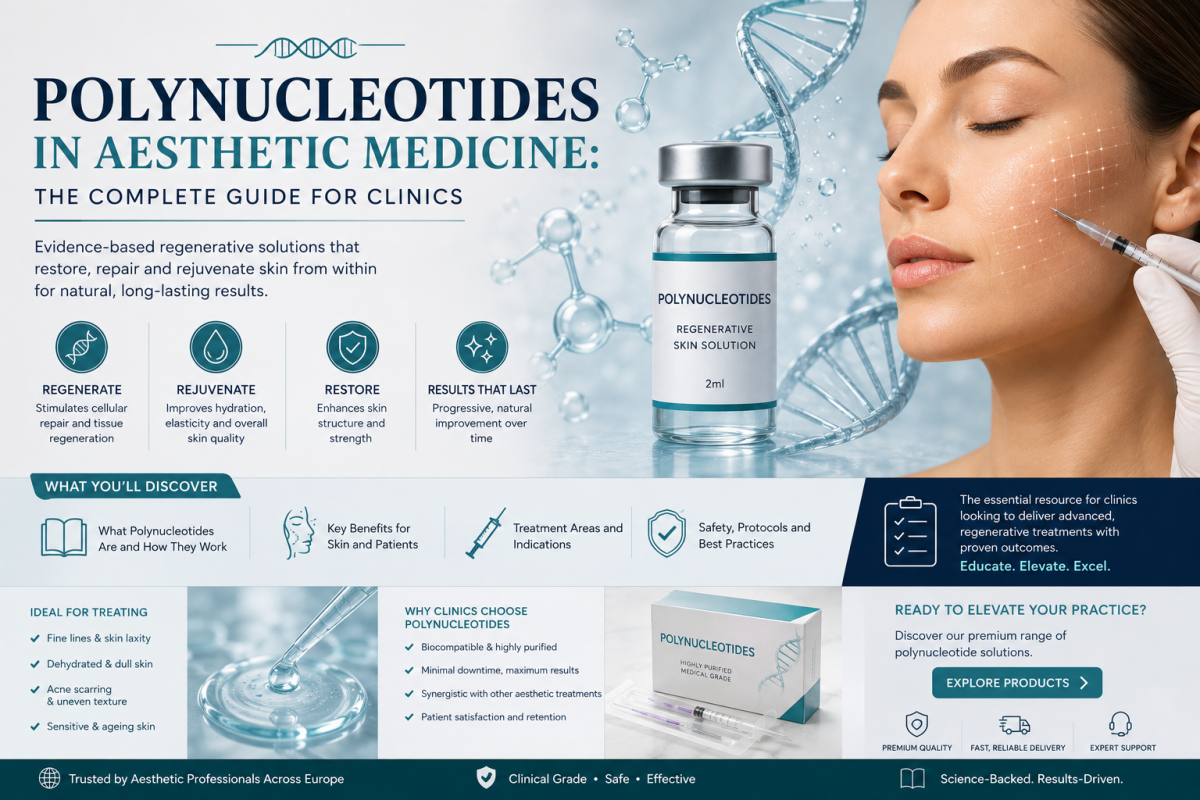
Polynucleotides in Aesthetic Medicine: The Complete Guide for Clinics
Aug
Polynucleotides in Aesthetic Medicine: The Complete Guide for Clinics
If there’s one ingredient category that’s defined the shift toward regenerative aesthetics over the past few years, it’s polynucleotides. Once a niche offering, PN and PDRN injectables are now a core part of most serious skin-quality menus — and for good reason. Unlike a standard hyaluronic acid booster, polynucleotides don’t just hydrate; they signal the skin to repair and rebuild itself. Here’s what every clinic needs to understand before stocking them.
What Are Polynucleotides?
Polynucleotides (PN) and their more purified relative, polydeoxyribonucleotide (PDRN), are nucleic acid fragments — most commonly extracted from salmon or trout DNA — chosen because their molecular structure is remarkably similar to human DNA. This similarity is what makes them so effective: the body readily recognises and responds to them, rather than treating them as a foreign substance to be broken down and cleared.
Once injected into the mid-dermis, polynucleotides activate adenosine A2A receptors in fibroblasts — the cells responsible for producing collagen and elastin — triggering genuine tissue regeneration alongside anti-inflammatory and wound-healing effects.
How Polynucleotides Differ From HA Skin Boosters
This is the distinction most patients (and some newer practitioners) miss. A standard hyaluronic acid skin booster hydrates by binding water — fast-acting, but relatively temporary. Polynucleotides work through an entirely different mechanism: cellular signalling that drives the skin’s own regenerative machinery. The trade-off is timing — PN results build gradually across a course of treatment rather than appearing instantly — but the payoff is genuine structural improvement in skin quality, not just surface plumping.
Our dedicated polynucleotides category covers this full range separately from standard HA boosters for exactly this reason.
The Major Polynucleotide Products, and How They Differ
Rejuran — developed by PharmaResearch in Korea using DNA Optimizing Technology (DOT™), Rejuran is one of the most clinically documented PN products globally, with variants for general use (Healer), under-eye (I), and scarring (S).
[Mastelli Plinest](https://proaestheticsupply.eu/?s=Mastelli Plinest) — the original polynucleotide injectable, launched in 2005 by the Italian company that pioneered the entire category, using Italian trout DNA and proprietary PN-HPT™ purification technology.
Vitaran — a PDRN skin booster with a dedicated under-eye variant (Vitaran I), positioned for general regenerative use across the face and neck.
Nucleofill — Promoitalia’s tiered PN range (Soft Plus, Medium, Strong, 25, Eyes), letting practitioners scale concentration to the severity of the concern.
[Pure Eyes](https://proaestheticsupply.eu/?s=Pure Eyes) — a PN and HA combination formulated specifically for the thin, fragile under-eye area.
Each brand uses its own purification and sourcing process, so results and injection feel can vary even though the underlying active ingredient category is the same — worth trialling more than one brand before settling on your primary PN product.
What Polynucleotides Actually Treat
PN and PDRN injectables are used for fine lines, enlarged pores, dehydrated and dull skin, depressed acne scars, and general loss of elasticity. Under-eye-specific formulations additionally target dark circles and puffiness — an area where volumizing filler carries more risk of a “puffy” overcorrected look, making regenerative PN treatment a genuinely better-suited option for many patients.
Building a Polynucleotide Protocol
Most PN treatments follow a course structure — typically 2–4 sessions spaced 2–4 weeks apart — rather than a single visit. Setting this expectation with patients up front matters: PN is a commitment to a process, not a one-off fix, and framing it that way tends to produce better patient satisfaction than promising instant results.
Polynucleotides also combine naturally with other categories. Pairing PN treatment with dermal fillers for a patient who needs both structure and regeneration, or with TSK fine-gauge needles for precise, low-trauma delivery, is a common and effective combination.
Frequently Asked Questions
Is PDRN the same as PN? They’re closely related — PDRN is generally considered a purer, more concentrated form of PN, and the terms are sometimes used interchangeably across different manufacturers.
How long do polynucleotide results last? Typically 6–12 months, depending on the specific product, treatment area, and how many sessions were completed in the initial course.
Are polynucleotides safe? Yes, when sourced from CE-marked, properly manufactured products — the salmon/trout DNA source is chosen specifically for biocompatibility and carries no viral risk associated with mammalian-derived materials.
Can polynucleotides be used alongside dermal fillers? Yes, though most PN manufacturers recommend spacing treatments appropriately relative to recent cross-linked HA filler injections — check individual product guidance, as protocols vary by brand.
Stocking Your Polynucleotide Range
ProAestheticSupply.eu stocks a full range of CE-approved polynucleotide products, with fast delivery across the UK and EU. Browse our dedicated polynucleotides category, or explore the wider skin boosters range to compare PN-based products against HA alternatives. Check our FAQs for ordering information, or contact our team if you need help choosing the right PN product for your patient base.
